Taking the Bodhisattva Regarder of the Sounds of the World as My Ideal, I Will Strive with a Compassionate Heart
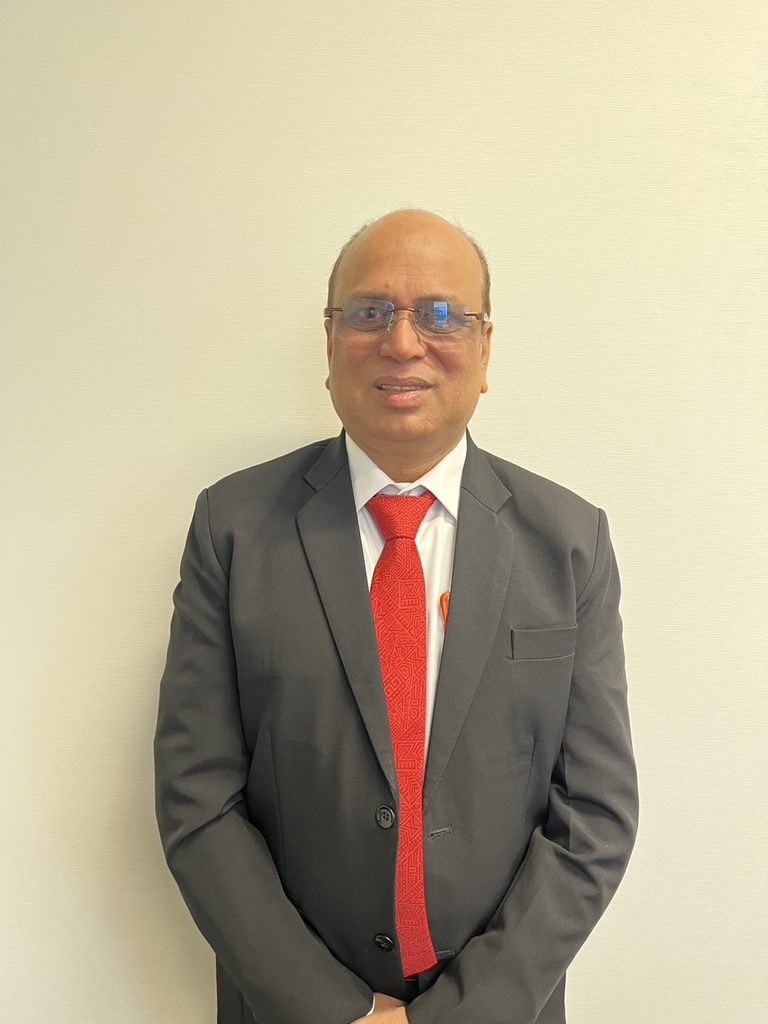
Mr. Priya Ranjan Barua, Bangladesh Dharma Center
When and how did you encounter the teachings of Rissho Kosei-kai?
I was born and raised in a family that practiced Theravada Buddhism, and because two of my uncles were Theravada Buddhist monks, I grew up with a deep faith in the Buddha. After graduating from university, I began working as a government employee in Chittagong, where my family home was located, but I was eventually transferred to Sylhet, about four hundred kilometers away. Sylhet is a city that developed as a center of Islamic culture, and there were only a few Buddhist temples scattered throughout the city. Before long, I came to have fewer opportunities to visit temples and learn about the Buddha’s teachings.
Then, one day in 2000, I met my friend Biblob Barua and my relative Ashim Barua. It was then that I first learned about Rissho Kosei-kai, a lay Buddhist organization, that had a liaison office in Chittagong. They also introduced me to Biman Kumar Barua, who was serving as the leader of the liaison office at the time.
Thanks to their kind encouragement, I began making frequent trips from my workplace in Sylhet all the way to Chittagong. I started participating in sutra recitation services and hoza, or “Dharma circle,” held every Friday.
Although both Theravada Buddhism and Rissho Kosei-kai are rooted in the Buddha’s teachings, there are differences in their approaches to Buddhist practice. In Theravada Buddhism, monks generally recite the sutras in Pali and give Dharma talks. Lay followers, on the other hand, often focus on ritual practices such as paying homage to the Buddha, chanting sutras, and making offerings. Because they do not understand Pali, laypeople may find it difficult to fully absorb the Buddha’s teachings.
In Rissho Kosei-kai, however, members themselves recite the Lotus Sutra together in Bengali, and they discuss the Buddha’s teachings and learn from one another about them.
What impressed me most deeply was seeing Rissho Kosei-kai members, as lay Buddhists, practice the bodhisattva way by cherishing their families and work while sharing the Buddha’s teachings for the happiness and peace of others. This fresh and moving experience touched my heart deeply and made me feel strongly that I, too, want to walk this path. It was after this that I joined Rissho Kosei-kai.
Meeting your friend and relative was a major turning point in your faith, wasn’t it?
Yes, absolutely. It was because I met them that I was able to encounter Rissho Kosei-kai and the teachings of the Lotus Sutra. By putting those teachings into practice in my daily life, I have received many merits and found great spiritual support. I believe that meeting those two people was an invaluable karmic connection that opened up a new horizon in my life.
When I first visited Rissho Kosei-kai, Rev. Kazumasa Iizawa, former minister of the Oita Dharma Center, was visiting Bangladesh from Japan to share the Dharma. He had been sowing the seeds of the Dharma in Bangladesh for many years, and I was able to hear many valuable stories from him. I was particularly interested when he spoke about how Rissho Kosei-kai members practice the bodhisattva way every day for the happiness of others. From then on, I traveled from Sylhet, where I was working, every Friday to the Rissho Kosei-kai liaison office in Chittagong and participated in sutra recitation services and hoza together with members of the sangha. Later, because I wanted to share the wonderful teachings of Rissho Kosei-kai with many people in Sylhet, I began inviting friends and acquaintances to sutra recitation services and hoza. As a result, thanks to the sangha members’ support, I was able to connect twenty-five households with the Dharma.

As you have studied the teachings of the Lotus Sutra, what has left the strongest impression on you?
The Lotus Sutra features many bodhisattvas, including Manjusri, Maitreya, and Never Unworthy of Respect. Each of these bodhisattvas has wonderful virtues and a particular role, and I believe they each show us an example of how we should aspire to live.
Among them, I am particularly drawn to the Bodhisattva Regarder of the Sounds of the World, the embodiment of compassion. I look up to the Bodhisattva Regarder of the Sounds of the World and view this bodhisattva as a great ideal to strive toward.
Chapter 25 of the Lotus Sutra, “The Bodhisattva Regarder of the Sounds of the World as Universal Gateway,” states that the Bodhisattva Regarder of the Sounds of the World manifests her thirty-three embodiments to expound the Dharma. This means that the Bodhisattva Regarder of the Sounds of the World manifests in various forms in order to liberate people, showing them a path to liberation according to their individual circumstances. This is an expression of the workings of compassion.
Taking the Bodhisattva Regarder of the Sounds of the World as my ideal, I would like to continue striving so that, with compassion in my heart, I can be there for people who are suffering and in distress, even if only in a small way.
Is there a particular teaching of Rissho Kosei-kai that you keep close to your heart?
I like the expression “Putting others first,” and I try to put it into practice in my daily life. I believe that “Putting others first” expresses the essence of the bodhisattva way taught in the Lotus Sutra and is itself the practice of the bodhisattva way. At the Dharma center, we are taught that a bodhisattva is someone who seeks enlightenment while at the same time taking action for the happiness of others and walking a path toward happiness for both oneself and others. When we look at society today, however, there are many people who think and act primarily for themselves and live according to their own interests. That is very unfortunate. But precisely because of this, I believe that when we make “Putting others first” our guiding principle and take action wishing for the happiness of others, we discover true joy and a sense of purpose in our lives.
What aspect of Rissho Kosei-kai are you fascinated by?
Among the various practices of Rissho Kosei-kai, I am particularly drawn to ancestor appreciation, hoza, and the Donate-a-Meal Movement. Through sutra recitations we express our gratitude to the Buddha and our ancestors. Through hoza, we can talk and learn the Dharma together with other members of the sangha and share our experiences and the merits we have received through our faith. The Donate-a-Meal Movement is also a concrete practice of the bodhisattva way based on the Buddhist spirit of “empathy, prayer, and donation.” Several times a month, we voluntarily go without one meal, experience hunger, pray for the happiness of people around the world who are suffering from poverty, illness, and other hardships, and make a monetary offering. For me, this is also a peace movement that is highly relevant to the world today.
Finally, could you tell us about your goals for your Buddhist practice and your dreams for the future?
Rissho Kosei-kai’s Members’ Vow, which we recite regularly, clearly sets forth our purpose and guiding principles for Buddhist practice: “we vow to perfect ourselves” and “we pledge ourselves to follow the bodhisattva way to bring peace to our families, communities, and countries, and to the world.”
Therefore, I would like to continue practicing and striving every day in accordance with the Members’ Vow, without ever changing my commitment to it.
As for my dreams for the future, I will reach retirement age in three years. I would like to regard the beginning of my second life as a new starting point and devote myself wholeheartedly to sharing and transmitting the Dharma and practicing the bodhisattva way for the happiness of others. I hope to live a fulfilling and meaningful life.
